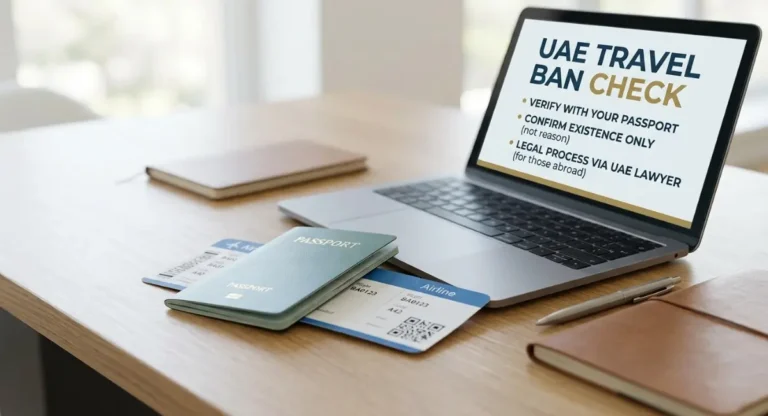

How to remove travel ban in UAE comes down to one rule: a ban is removed when the matter behind it is formally closed and the removal is processed, not when time passes, a passport changes or a payment is made on its own. Since August 2024, that final step has become automatic in many cases once the case is closed in the system. If you live in the USA, the UK or Europe, much of the process can be handled without flying back, as long as the removal is properly recorded and confirmed before you travel.
Is Travel Ban Removal in UAE Now Automatic? Not the Way Most People Think
What the Ministry of Justice changed in 2024
In August 2024, the UAE Ministry of Justice announced that lifting a travel ban had become a proactive service for eligible cases: once a case is formally closed, the ban is lifted without the person having to apply for it. The ministry said the procedure had been cut from nine steps to zero, with no attachments required and processing time reduced from one working day to minutes, as reported by Khaleej Times. Authorities in Abu Dhabi and Dubai also automated the cancellation of travel bans once pending fines are settled. How a particular ban is lifted still depends on the type of case and where it is registered.
That is genuinely good news. It also explains why so many people now assume the problem will take care of itself.
The catch: “resolved” has to mean recorded
Automatic removal starts from one trigger: the case being resolved in the system. A debt paid informally, a settlement agreed over the phone, or an employer who promised to “sort it out” may never reach that point. If nothing has been recorded against the file, nothing triggers the removal.
A common example: someone settles a dispute by paying the full amount, say AED 100,000, and expects the ban to disappear on its own. It does not. The settlement has to be recorded against the case and the removal processed. Only then does the system update.
For people outside the UAE there is a second problem. Most do not know whether a case exists at all, let alone whether it has been resolved, because a ban is usually recorded without the person being notified.
Step Zero: Confirm the Ban Actually Exists
Before trying to remove anything, confirm there is something to remove. Some people spend months negotiating an old debt that never became a case. Others assume they are clear and find out at the airport.
From abroad, a UAE travel ban check can be carried out on your behalf using your passport number. It helps to have:
- a copy of your passport
- your previous UAE visa number
- your Emirates ID number, if you held one
- your older passport, if your UAE visa was stamped in it
- a copy of your last UAE exit stamp
The check confirms whether a ban exists. If one does, your situation is then looked at properly before anything else is done.
Start With What You Left Behind
Most people already know, or can work out, what is likely to sit behind a ban. Your own history is the best starting point.
| What you left behind | What usually has to happen before the ban can lift |
| An unpaid credit card or personal loan | The debt is paid, or a settlement is agreed with the bank and recorded |
| A cheque that bounced | The amount is settled with the cheque holder and the settlement is recorded |
| A tenancy ended early, or unpaid rent | The landlord’s claim is settled and closed |
| A job you stopped attending without resigning | The absconding report is withdrawn or cancelled |
| A complaint that was not about money | The case itself is concluded |
This is a starting point, not a diagnosis. Older matters, company debts and cases in more than one emirate can all sit behind the same name.
How to Lift Travel Ban in UAE, Route by Route
A debt or civil claim
Under the UAE Civil Procedure Law, a creditor can seek a travel ban where the debt is AED 10,000 or more (about US$2,720) and there are serious grounds to fear the debtor will leave. A ban of this kind is tied to the claim rather than to a calendar, so it generally stays in place until the debt is paid or the matter is otherwise resolved.
For someone abroad, resolution usually means negotiating with the bank or creditor, agreeing terms in writing, completing payment, and making sure the settlement is recorded against the case so the ban can be lifted.
A bounced or security cheque
Since January 2022, a cheque that bounces purely for lack of funds is no longer treated as a crime in the UAE. That does not make it disappear. The holder can still use the cheque as a fast route to enforcement, and a travel ban can follow. Deliberate conduct, such as closing the account before the cheque was presented, can still create criminal exposure.
To lift a ban linked to a cheque, the amount is settled with the holder and the settlement is recorded. Our guide on how bounced cheques are enforced in the UAE explains the process from the holder’s side, which is useful to understand when you negotiate.
An absconding report
If an employee is absent from work for more than seven consecutive days without a valid reason, the employer can file an absconding report. This can also lead to a one-year ban on obtaining a new UAE work permit. It is a labour and immigration record rather than a debt case.
An absconding report can be withdrawn by the employer, which is usually the quickest route, or challenged through the Ministry of Human Resources and Emiratisation (MOHRE) where it was filed without a proper basis.
When the ban is not about money
Some restrictions cannot be settled like a debt. Where a ban is linked to a criminal complaint, it generally remains until that case is concluded, and the route depends entirely on the facts.
Immigration-related restrictions are a different thing again. They concern entry, residence or deportation rather than leaving the UAE, and they are handled by the immigration authorities: GDRFA in Dubai and ICP in the other emirates. Resolving a debt does not clear an immigration restriction, and clearing an immigration matter does not resolve a debt.
How to Remove Travel Ban in UAE Without Flying Back
For most people abroad, the process follows the same order:
- Confirm the ban exists, using your passport number and the documents listed above.
- Look at what sits behind it. Once a ban is confirmed, your situation is reviewed properly before anything is agreed.
- Resolve the matter remotely. Negotiation with a bank, landlord or other creditor can be handled by email and WhatsApp, and any settlement is recorded in writing.
- Make sure the settlement is recorded and the removal is processed. Paying alone does not lift the ban.
- Get written confirmation that the ban is cleared, and only then book travel.
Where the matter can be resolved, our lawyers take the legal steps needed to have the ban lifted. Timing depends on the matter: a restriction linked to a settled debt can move quickly, while contested matters take longer.
Can You Remove a UAE Travel Ban Online?
Partly, and not in the way most people expect. Since 2024, the final removal step is processed automatically for eligible cases once the case is formally closed, so “removing it online” really comes down to getting the case closed and the removal processed.
The UAE online services that display case and ban information are built around UAE Pass and an active Emirates ID. Most people who have left the UAE no longer have either, which is why the online route rarely works from abroad. The practical alternative is to have the check and the resolution handled on your behalf.
Five Things That Do Not Remove a Travel Ban
- A new passport. UAE records are attached to the person, not the passport booklet. A renewal, a name change or a second nationality does not clear an existing case.
- Time passing. A civil ban is tied to the underlying matter rather than a fixed period, so a case from years ago can still be active.
- Paying at the airport. Paying in the hope of flying the same day rarely works, because records do not update instantly at the border.
- A payment on its own. Even paying the full amount does not lift the ban until the settlement is recorded against the case and the removal is processed.
- Clearing one emirate. Records are held separately by each authority and emirate, so a clear result in one place does not rule out a matter elsewhere.
After the Ban Is Lifted: Proof Before You Fly
The safest time to book a flight is after you have written confirmation that the ban has been cleared, not before.
Before you travel:
- Keep the written confirmation, the settlement agreement and proof of payment together.
- Make sure every matter you know of has been dealt with, not only the one behind the ban you found.
- Apply the same caution to connecting flights. Passenger data is shared before you land, so a layover in Dubai or Abu Dhabi is not a way around an active ban. Our guide on transiting through Dubai with an old case or debt explains the risk.
Questions People Ask About Removing a UAE Travel Ban
Is travel ban removal in UAE now automatic?
Only after the case is formally closed. Paying the amount owed does not remove a ban on its own: the settlement has to be recorded and the removal processed. Since August 2024, the UAE Ministry of Justice has treated that final step as a proactive service for eligible cases, cutting it from nine steps to zero, but it only starts once the case is closed in the system.
How to remove travel ban in UAE online?
There is no single online button for it. The removal is processed once the case behind the ban is formally closed and the settlement recorded. The online services that show case information need UAE Pass and an active Emirates ID, which most former residents no longer hold, so people abroad generally have the check and the closure handled on their behalf.
Do I need to come to the UAE to lift a travel ban?
In many cases, no. The check can be carried out using your passport number, and settlements with banks or other creditors can be negotiated by email and WhatsApp. Whether any step depends on your circumstances in the UAE is assessed once the ban has been confirmed.
Will a new passport remove a UAE travel ban?
No. Records are linked to the person rather than to a specific passport, so a renewal, a name change or a second nationality does not clear an existing case. The matter behind the ban still has to be resolved.
Will a lifted travel ban stop me entering the UAE again?
Not if the removal has been properly processed. Once the ban has been cleared from the immigration system and a fresh check confirms nothing is showing, you should not be stopped because of that ban. This is why we recommend getting written confirmation and re-checking before you travel.
What if the ban was placed by mistake?
In our experience, UAE travel bans are not placed by mistake. Every ban is linked to a specific case or record. When someone believes theirs is an error, it usually turns out to relate to a matter they had forgotten, such as an old credit card, a cheque or an employer report.
Disclaimer: This guide gives general information about UAE law and procedure as of October 2026 and is not legal advice. Every case is different, so speak to a lawyer about your own situation before making travel plans or taking any other step.