
Employment Lawyers in Dubai for Expats From the USA, UK and Europe
Our employment and labour lawyers in Dubai handle unpaid salary, end-of-service gratuity, wrongful termination, notice period and non-compete disputes for employees and employers, from the MOHRE complaint through to settlement or a final decision. Clients in the USA, UK and Europe do not need to travel to Dubai.
Employment Law in Dubai for Expat Employees and Employers
Employment law in Dubai is governed by Federal Decree-Law No. 33 of 2021 Regarding the Regulation of Employment Relationship, commonly called the UAE Labour Law, together with its executive regulations and later amendments, including Federal Decree-Law No. 9 of 2024. It covers private sector employees in mainland Dubai. Financial free zones such as DIFC and ADGM apply their own employment laws, so the first step in any case is confirming which rules govern your contract.
Our employment and labour lawyers in Dubai act for both employees and employers. For employees, that usually means unpaid salary, end-of-service gratuity, wrongful termination, notice period disputes and non-compete clauses. For employers, it means employment contracts, lawful terminations and responding to complaints filed against the company. Many of our clients are expats from the USA, the UK and Europe, and their cases are handled without any need to travel to Dubai.
Most disputes start with a complaint to the Ministry of Human Resources and Emiratisation (MOHRE), which first tries to settle the matter between the parties. Where the claim is worth AED 50,000 or less, MOHRE can issue a final decision itself, and either side has 15 working days to appeal it. Larger claims that cannot be settled move to formal proceedings before the relevant authorities. We represent clients at every stage and aim for the fastest fair resolution, which is often a negotiated settlement.
Timing matters in labour disputes. Under the amended Labour Law, a claim cannot be heard once two years have passed since the employment relationship ended, and the employer must pay final wages and dues within 14 days of the contract ending. Evidence such as the employment contract, offer letter, Wage Protection System (WPS) salary records, emails and messages is far easier to gather while the matter is fresh, so we advise clients to contact us as soon as an issue arises.
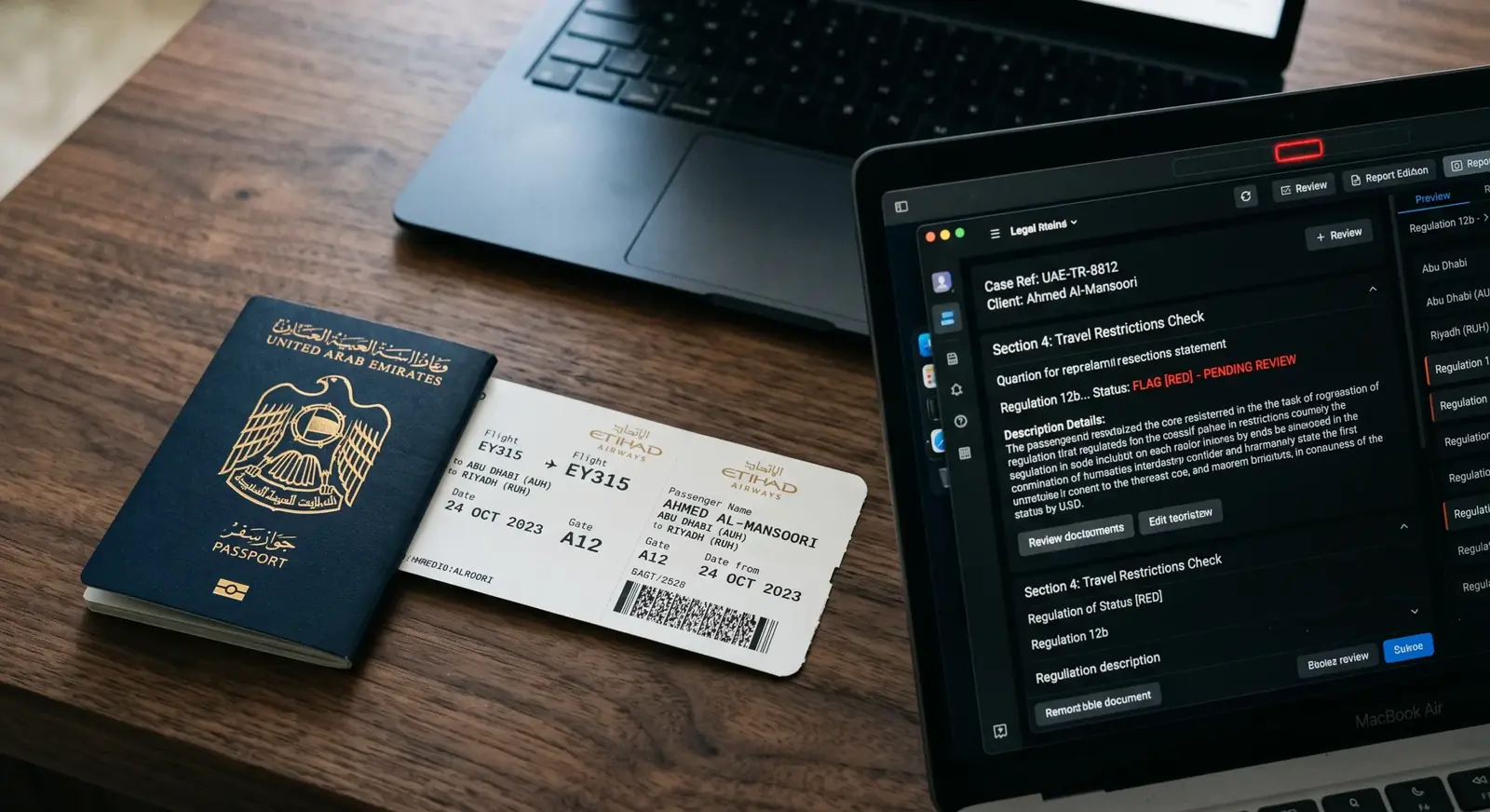
An employment dispute can also affect your residence status and future travel to the UAE. An absconding report filed by an employer is one example, and our guide on checking and clearing an absconding case in the UAE explains how it works. Where a dispute may have led to a ban, our travel ban check UAE service confirms your status with the relevant authorities using your passport number.
When Do You Need an Employment Lawyer in Dubai?
- You have been terminated and believe it was unfair, unlawful or without proper notice
- Your salary is delayed or unpaid, or your final dues were not paid within 14 days of your contract ending
- You resigned and your employer is refusing or reducing your end-of-service gratuity
- Your former employer is enforcing a non-compete clause that blocks you from a new job
- An absconding report has been filed against you after you left your job
- You need your employment contract reviewed before you sign, resign or agree to an exit settlement
- You are an employer facing a labour complaint or MOHRE case from an employee
- You are an employer who needs to end an employment contract lawfully and agree a fair exit
Labour Dispute and Employment Contract Services We Provide
- Wrongful termination claims for compensation, notice pay and final dues
- Unpaid salary and final settlement claims against employers in Dubai
- End-of-service gratuity disputes, including gratuity after resignation
- MOHRE complaint filing and representation, from amicable settlement to a final decision
- Employment contract review, drafting and contract disputes
- Advice on notice periods, non-compete clauses and garden leave
- Negotiated exit settlements that avoid a drawn-out dispute
- Employer advice on lawful terminations and responding to labour complaints
- Representation for employees and employers, including clients in the USA, UK and Europe who are not in Dubai
How the Labour Complaint Process Works in Dubai
-
1
Case assessment
We review your employment contract, offer letter, salary records and correspondence, confirm whether the UAE Labour Law or a free zone law such as DIFC applies, and check that your claim is within the two-year time limit.
-
2
MOHRE complaint filing
Where applicable, we file the labour complaint with MOHRE and represent you while the ministry tries to settle it amicably. For claims of AED 50,000 or less, MOHRE can issue a final decision, which either side can appeal within 15 working days.
-
3
Negotiated settlement
Many disputes resolve at this stage through a negotiated settlement that saves both sides time and keeps the outcome in your control. We make sure any settlement covers every amount owed and is put in writing.
-
4
Formal proceedings
Larger claims, or disputes that cannot be settled, move to formal proceedings before the relevant authorities. We represent you through to a final decision and keep clients in the USA, UK and Europe updated at every step.
The Complete Guide to UAE Labour Law and Employee Rights for Expats
Our employment lawyers in Dubai advise employees and employers at every stage of a workplace dispute, from unpaid salary, end-of-service gratuity and termination to notice periods, commissions, leave, non-compete clauses and the meaning of a contract term. This guide explains the rules under the UAE Labour Law as amended in 2024, so you know where you stand before you act.
Before advising, we review your employment contract, offer letter, payslips and WPS records, company policies and the relevant emails and messages. Where a practical resolution is possible, we pursue it first. Where a formal claim is needed, we handle the MOHRE procedure and represent you within our authorised scope.
What This Service May Include
- Unpaid salary, commissions and final settlement claims
- End-of-service gratuity calculation and disputes
- Wrongful termination and notice period disputes
- Non-compete clauses, garden leave and contract interpretation
- Employer advice on contracts, policies and lawful terminations
- Negotiation, settlement and formal proceedings
In-Depth: What You Need to Know
Private sector wages are paid through the Wage Protection System (WPS), which leaves a clear record of what was and was not paid. When a contract ends, the employer must pay all wages and entitlements within 14 days. Withheld or delayed salary is usually recovered through a MOHRE complaint, and a claim of AED 50,000 or less can be decided by MOHRE directly.
A full-time expat employee with at least one year of continuous service is entitled to gratuity based on basic salary: 21 days for each of the first five years and 30 days for each year after that, capped at two years of wages. Unpaid leave days are not counted. Under the current law, gratuity is calculated the same way whether you resign or are terminated, a common point of dispute with employers still applying the old rules.
Either party can end the contract for a legitimate reason with written notice of 30 to 90 days, or at least 14 days during probation. Where a termination is found to be unlawful, compensation of up to three months of the last wage can be awarded, on top of notice pay and end-of-service gratuity. The strength of a claim depends on the reason given, the paperwork and how the termination was carried out.
A non-compete clause is only valid where the job gave access to clients or confidential business information, and it must be limited in time, place and type of work to what is needed to protect the employer. It cannot last more than two years after the contract ends, and it falls away where the employer ended the contract in breach of the law. Every clause should be checked against these conditions before you accept a new role.
Under the Labour Law as amended in 2024, a labour claim cannot be heard once two years have passed from the end of the employment relationship. MOHRE decides claims of AED 50,000 or less, with 15 working days to appeal its decision, while larger claims move to formal proceedings. Leaving the UAE does not pause this time limit, so expats who have relocated should act well within the two years.
Financial free zones run separate employment systems. DIFC applies DIFC Employment Law No. 2 of 2019 and ADGM applies its own Employment Regulations, each with different rules on end-of-service benefits, notice and where a claim is filed. MOHRE does not handle these disputes, so the first question in any free zone case is which law governs the contract.
Employment and Labour Law FAQs for Expats in the USA, UK and Europe
Last reviewed: October 2026Under the UAE Labour Law as amended in 2024, a labour claim cannot be heard once two years have passed from the end of the employment relationship. Leaving the UAE does not pause that time limit. Evidence is also easier to gather early, so contact us as soon as an issue arises and we will confirm the deadline that applies to your claim.
Yes. A full-time expat employee with at least one year of continuous service is entitled to end-of-service gratuity whether they resign or are terminated, and the current law does not reduce it for resignation. Gratuity is calculated on basic salary at 21 days per year for the first five years and 30 days per year after that, and the claim must be made within two years of leaving.
A termination is unlawful where it is a response to a serious complaint you made to MOHRE or a valid claim you brought against the employer. A dismissal without a legitimate reason or proper written notice can also be challenged. Compensation for unlawful termination can reach three months of your last wage, paid on top of notice pay and gratuity.
Your contract sets the notice period, which must be between 30 and 90 days. During probation, you must give at least one month's written notice to move to another UAE employer, or at least 14 days to leave the country. In limited cases, such as the employer failing to meet its obligations or assault at work, you can leave without notice and keep your end-of-service rights.
No. The UAE Labour Law prohibits employers from withholding a worker's official documents, and that includes your passport. Your employer cannot hold the original against your will, including during a dispute or after you resign. We can raise this with the employer and through a MOHRE complaint as part of your case.
Within 14 days of the contract ending. That covers outstanding wages, end-of-service gratuity and other entitlements, such as pay for unused annual leave. Where the payment is late or short, we file a MOHRE complaint for the full amount, and for claims of AED 50,000 or less MOHRE can decide the case itself.
MOHRE first tries to settle the dispute between the parties. For claims of AED 50,000 or less, or where a party fails to honour an amicable settlement, MOHRE issues a final decision, which either side can appeal within 15 working days. Larger claims that cannot be settled move to formal proceedings before the relevant authorities, and we represent clients through that stage as well.
Only within limits. A non-compete clause is valid where your job gave you access to clients or confidential business information, and it must be restricted in time, place and type of work. It cannot run for more than two years after the contract ends, and it falls away where the employer ended the contract in breach of the law. We review the clause before you accept a new role.
No. DIFC applies DIFC Employment Law No. 2 of 2019 and ADGM applies its own Employment Regulations, each with separate rules on end-of-service benefits, notice and where claims are filed. MOHRE does not handle these disputes, so the first step in any free zone case is confirming which law governs your contract.
Yes, we act for both sides depending on the case. For employees, that means unpaid salary, gratuity, wrongful termination and non-compete disputes. For employers, it means employment contracts, lawful terminations, exit settlements and responding to labour complaints filed with MOHRE.
Yes. Reviewing an employment contract, resignation letter or exit settlement before you sign shows you the notice period, non-compete terms, gratuity basis and any waiver of rights, so you know exactly what you are agreeing to. A settlement signed without checking can close off claims you were entitled to make.
Yes. Clients in the USA, UK and Europe do not need to travel to Dubai. We review your documents, file and follow the case with the relevant authorities, and keep you updated by email and phone at every stage until it is settled or decided.
Get In Touch
Send us a few details about your case and a member of our team will get back to you promptly — usually within one business day.
Unpaid salary, gratuity or an unfair termination? Speak to an employment lawyer in Dubai today.
Get in touch today for expert legal advice tailored to your situation.
Related Practice Areas
Travel Ban Check
Check the existence or status of a UAE travel ban quickly and confidentially, and take the right steps to have it resolved.
Learn more
Legal Drafting Services
Contracts, MOUs, powers of attorney, and legal notices drafted to meet UAE legal requirements.
Learn more
Commercial Disputes
Representation in shareholder disputes, breach of contract claims, and partnership disagreements.
Learn more