

How to Recover Investment Money in Dubai From a Business Partner
To recover investment money in Dubai from a business partner, start by establishing what your money legally was: a loan,…
Read the guide →Debt collection in Dubai and debt recovery in UAE, handled by lawyers for clients in the USA, UK and abroad. We check the debtor's assets first, send a formal legal notice within 2 to 3 working days, then negotiate or move to litigation. Free first consultation.
Debt recovery in UAE is the legal process of getting back money you are owed, from unpaid invoices and loans to bounced cheques and investments that stopped paying. It usually starts with a formal legal notice and negotiation, and moves to litigation and enforcement through the relevant authorities if the debtor still does not pay.
Unpaid invoices, defaulted loans and bounced cheques cost businesses and individuals real time and money, and the longer a debt sits unresolved, the harder it usually becomes to collect. Unlike a debt collection agency in Dubai, our lawyers can take your matter from the first legal notice through to enforcement.
If you live in the USA or elsewhere abroad, you may have lent money to a company, business partner or individual in the UAE, or invested and received profit for a few years before the payments stopped. We handle negotiation with the debtor by email. Our guide on recovering a debt in Dubai from the USA or UK explains the evidence, steps and timelines in detail.
A written contract or cheque is not always required. Under Federal Decree-Law No. 35 of 2022 on Evidence, WhatsApp and email messages can carry the same weight as written documents when their authenticity is verified, and bank transfer receipts help prove the payment and its purpose.
Our approach is deliberately practical: before we recommend legal action, we assess whether the debtor actually has recoverable assets in the UAE, so you are not spending time and money chasing a claim that can't realistically be enforced.
We assess the debt, your documents (contract, cheque, bank transfers, WhatsApp or email messages) and the debtor,s likely position and assets.
Within 2 to 3 days, we issue a formal legal notice stating the amount owed, the basis of the debt and a deadline to pay.
Where the debtor engages, we work to secure a settlement or a realistic, enforceable payment plan, handled by email so you can follow it from the USA or abroad.
If the debtor still does not pay, a bounced or security cheque can go straight to execution (usually about 2 to 3 months), while a claim without a cheque becomes a civil case, which generally takes around 6 to 9 months.
Once a judgment is issued, we request a travel ban on the debtor the next day, usually approved within a few hours to 2 days, and support enforcement of the judgment.
Our debt collection Dubai service helps individuals, companies, investors, suppliers, contractors, landlords and other legitimate creditors pursue outstanding amounts through structured legal and commercial strategies. Unpaid invoices, loans, contractual balances and delayed payments can affect cash flow and business operations, and effective recovery requires more than repeatedly requesting payment.
A debt collection agency in Dubai can contact and negotiate with a debtor, but when talks fail, agencies usually hand the matter to lawyers. A debt recovery lawyer can handle the full path in one place: legal notice, negotiation, legal action, execution and a travel ban on the debtor.
Three UAE laws matter most in 2026. Under the Commercial Transactions Law (Federal Decree-Law No. 50 of 2022), a bounced cheque can be enforced directly through execution. Under the Evidence Law (Federal Decree-Law No. 35 of 2022), WhatsApp and email messages can serve as written proof. And the new Civil Transactions Law (Federal Decree-Law No. 25 of 2025), in force since 1 June 2026, applies its limitation periods to claims that had not expired by that date, so older debts should be reviewed promptly.
For written, fixed-amount debts, UAE law also provides a faster payment order route, and a travel ban can be requested against a debtor who may leave the country once the legal conditions are met. We explain which route fits your documents before you commit to litigation costs.
Debt recovery in UAE covers most money that is legally owed to you: unpaid commercial invoices and account balances, contractual and service payments, personal and business loans, supplier and contractor debts, bounced cheques, and investment returns that have stopped. What matters is not only the amount but the evidence behind it. Dates, contract wording, payment history, notices and the identity of the other party can all affect which recovery route is best, so we review these details together before recommending a next step.
Since 2 January 2022, a cheque that bounces for insufficient funds is generally treated as a civil debt rather than an automatic criminal case, and these rules now sit in the Commercial Transactions Law (Federal Decree-Law No. 50 of 2022), in force since 2 January 2023. Under Article 667, the returned cheque can act as a writ of execution, so the holder can apply directly for full or partial execution without first filing a full claim. Criminal liability can still arise in bad-faith cases, such as deliberately closing the account or forging the cheque. In our experience, cheque execution usually takes about 2–3 months.
Many overseas clients invest in a UAE company, partnership or individual business and receive profit for a few years before the payments suddenly stop. At that point, the unpaid profit share or capital can become a debt. The strength of the claim usually depends on the investment agreement, any jurisdiction clause, bank transfer records and messages in which the other party acknowledged the money or promised returns. We start with a formal legal notice and negotiation, and move to legal action if the partner still refuses to pay.
A written contract or cheque helps, but it is not always essential. Under the Evidence Law (Federal Decree-Law No. 35 of 2022), WhatsApp and email messages can carry the same weight as written documents when their authenticity is verified. Bank transfer receipts show that money was paid, but a transfer on its own may not prove a loan, so messages confirming why the money was sent, or promising repayment or profit, are often decisive. Keep the original messages on your phone and do not delete any conversation with the debtor.
Under Article 324 of the Civil Procedure Law (Federal Decree-Law No. 42 of 2022), a creditor who fears the debtor may leave the UAE can apply for a travel ban. The debt usually needs to be AED 10,000 or more and should be due, unconditional and known; where the amount is not fixed, written evidence and a guarantee from the creditor may be required. In practice, we request the travel ban the day after a judgment is issued, and approval usually comes within a few hours to 2 days. The ban generally stays in place until the debt is settled.
If the debtor has left the UAE for good and has no business, assets or ties here, legal action is often not worth the cost, and we will tell you so honestly. If the debtor still has a business, assets or reasons to return, it can make sense to obtain a judgment, open execution and register a travel ban. Once the ban is in place, the debtor cannot leave the UAE on any future visit until the matter is resolved.
It depends on the company's legal status and whether its owners or managers can be held personally responsible. Where a company fails to comply with an execution order, Article 322 of the Civil Procedure Law allows measures, including a travel ban, against its legal representative or other responsible persons, but only after investigation shows they are personally responsible. If the company enters proceedings under the Financial Restructuring and Bankruptcy Law (Federal Decree-Law No. 51 of 2023, in force since 1 May 2024), creditor actions may be paused, so acting early matters.
The new Civil Transactions Law (Federal Decree-Law No. 25 of 2025) came into force on 1 June 2026 and replaced the 1985 law. Under its Article 6, limitation periods that had not expired by that date now follow the new law. The general period for civil claims remains 15 years, but some claim types changed; for example, professional services claims fell from five to three years. If your debt is several years old, have it reviewed promptly so a deadline is not missed.
Some contracts name DIFC as the place for resolving disputes. DIFC follows a common-law, English-language system, which many overseas investors find familiar, but proceedings there can be costly. Our team includes lawyers qualified to handle DIFC matters, and we also handle these contracts through arbitration where appropriate. Before taking any step, we check the dispute-resolution clause in your contract, because it decides which route is available.
A negotiated settlement is often faster and more flexible than legal action. After the legal notice, we communicate your position to the debtor, mostly by email, identify realistic settlement terms, and protect your interests throughout. A settlement may involve a lump sum, instalments or other agreed terms. It should always be recorded clearly in writing, so both parties know exactly what has been resolved, what remains to be paid, and what happens if a payment is missed.
Gather whatever shows the debt and your dealings with the debtor: contracts or agreements, invoices, cheques and bank return memos, bank transfer receipts, WhatsApp and email messages, and a copy of the debtor's Emirates ID or passport if you have it. A short timeline of key events also helps. Keep original records, do not delete any conversations, and send documents in another language as they are; translation requirements can be discussed during the assessment.
Your first consultation is free. Detailed document analysis, a formal assessment or a written legal opinion is chargeable, and fees are agreed per case, usually as a fixed fee or a fixed fee combined with a percentage of the amount recovered; a minimum claim amount applies. We do not promise outcomes that cannot responsibly be guaranteed. Instead, we explain the strengths, weaknesses and realistic routes in your matter so you can make an informed decision.
We check enforceability early, before you spend on legal action. If the debtor has no assets, income or business in the UAE, a claim may not be worth pursuing, and we will tell you so. If they are still in the UAE or likely to return, a judgment and travel ban can still put strong pressure on them to settle.
No. A written contract helps, but invoices, bank transfer receipts, and WhatsApp or email messages can also support a claim. Under Federal Decree-Law No. 35 of 2022 on Evidence, electronic messages can carry the same weight as written documents when their authenticity is verified. Bring whatever documentation you have.
It depends on the route. Straightforward cases can resolve at the legal notice stage within weeks. A bounced or security cheque usually takes about 2–3 months through execution, and a claim without a cheque becomes a civil case, which generally takes around 6 to 9 months.. We give you a realistic estimate after reviewing your case.
It depends on the company's legal status and whether its owners or managers can be held personally responsible. If a company fails to comply with an execution order, measures such as a travel ban can be taken against responsible persons after investigation. If the company enters bankruptcy proceedings, creditor actions may be paused, so acting early matters.
We move to the next stage: further negotiation where there is a realistic chance of payment, or legal action through the relevant authorities. If you hold a bounced cheque, we can apply for execution directly. We choose the route that gives you the best realistic outcome.
We prepare the formal legal notice within 2–3 days of receiving your documents. After that, timing depends on how the debtor responds and which route your case takes.
No. No responsible lawyer can guarantee the outcome of a disputed debt. Results depend on the evidence, the applicable law, the debtor's assets and conduct, and decisions of the relevant authorities. What we can do is assess your chances honestly before you spend money, and tell you if a claim is not worth pursuing.
A debt collection agency in Dubai can contact and negotiate with a debtor, but when that fails, agencies usually hand the matter to lawyers. Working with a debt recovery lawyer from the start means one team handles the legal notice, negotiation, legal action, cheque execution and any travel ban, without switching providers midway.
Yes, in suitable cases. A formal legal notice or negotiation can lead to a lump-sum or instalment settlement, and arbitration may be available if your contract provides for it. Legal action is used only when these options fail.
Yes. Many of our clients live in the USA, the UK, Europe and other countries. We negotiate with the debtor by email, keep you updated throughout, and explain at the start what your involvement will be at each stage.
If the debtor has left for good and has no assets, business or ties in the UAE, legal action is often not worth the cost, and we will tell you honestly. If they still have a business, assets or reasons to return, a judgment and travel ban mean they cannot leave the UAE on a future visit until the matter is resolved.
Usually not. Under Federal Decree-Law No. 50 of 2022, in force since 2 January 2023, a cheque that bounces for insufficient funds is generally a civil debt, and the cheque itself can be used for direct execution. Criminal liability can still apply in bad-faith cases, such as deliberately closing the account or forging the cheque.
Yes, if the legal conditions are met. Under Article 324 of the Civil Procedure Law, the debt usually needs to be AED 10,000 or more and there must be a real risk that the debtor will leave the UAE. We normally request the travel ban the day after a judgment, and approval usually takes a few hours to 2 days.
Your first consultation is free. Detailed document analysis, a formal assessment or a legal opinion is chargeable. Fees are agreed per case, usually as a fixed fee or a fixed fee combined with a percentage of the amount recovered, and a minimum claim amount applies. Official and enforcement fees may be payable separately.
Yes. Under the new Civil Transactions Law (Federal Decree-Law No. 25 of 2025), in force since 1 June 2026, the general period for civil claims remains 15 years, but some claim types have shorter limits, and unexpired periods now follow the new law. If your debt is several years old, have it reviewed promptly.
Often, yes. Interest may be claimed where your agreement or the law allows it, and the amount depends on the terms agreed between the parties. We check this when reviewing your documents and advise whether interest can be included in your claim.
To recover investment money in Dubai from a business partner, start by establishing what your money legally was: a loan,…
Read the guide →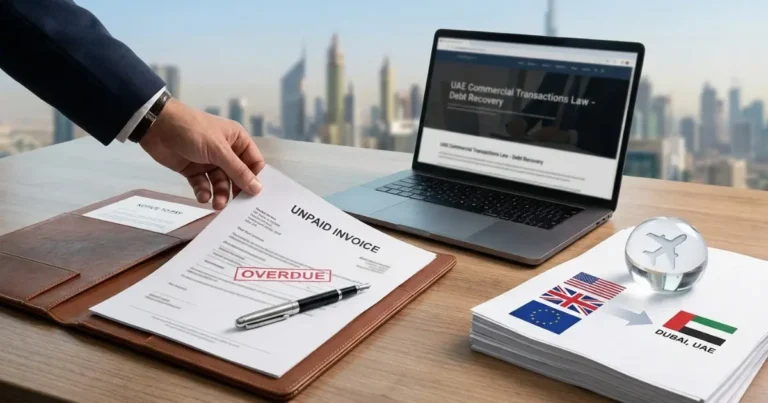
An unpaid invoice in Dubai is recoverable from abroad, and you do not need to be in the UAE to…
Read the guide →
Bounced cheque Dubai cases turn on one question: why the cheque bounced. A cheque that came back because the account…
Read the guide →
Quick answer: You can enforce a bounced cheque in the UAE from abroad, and it is a faster route than…
Read the guide →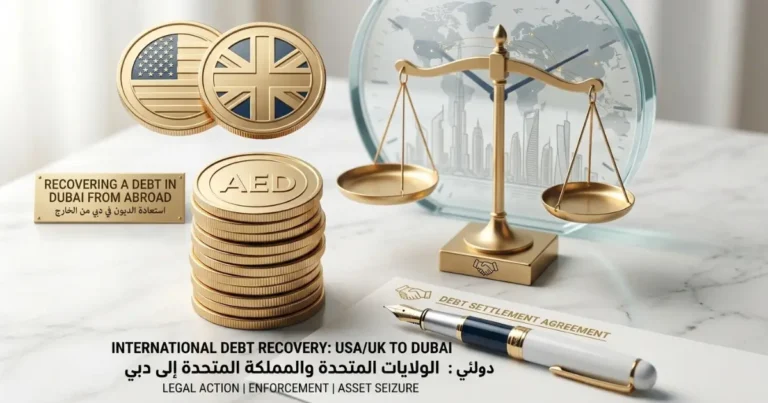
Quick answer: You can recover debt from Dubai while living in the USA or UK. A UAE lawyer reviews your…
Read the guide →Send us a few details about your case and a member of our team will get back to you promptly — usually within one business day.
Get in touch today for expert legal advice tailored to your situation.
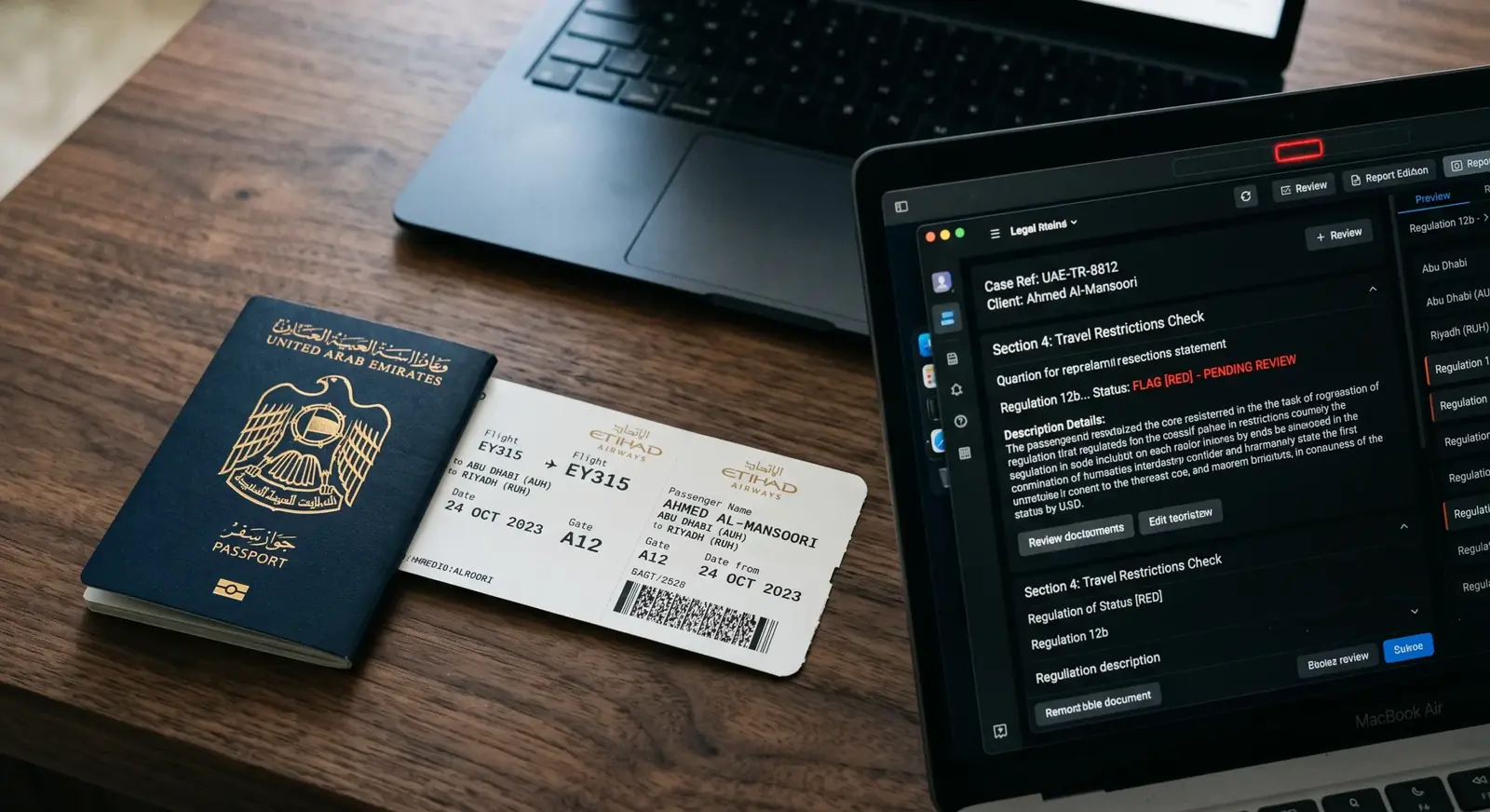
Check the existence or status of a UAE travel ban quickly and confidentially, and take the right steps to have it resolved.
Learn more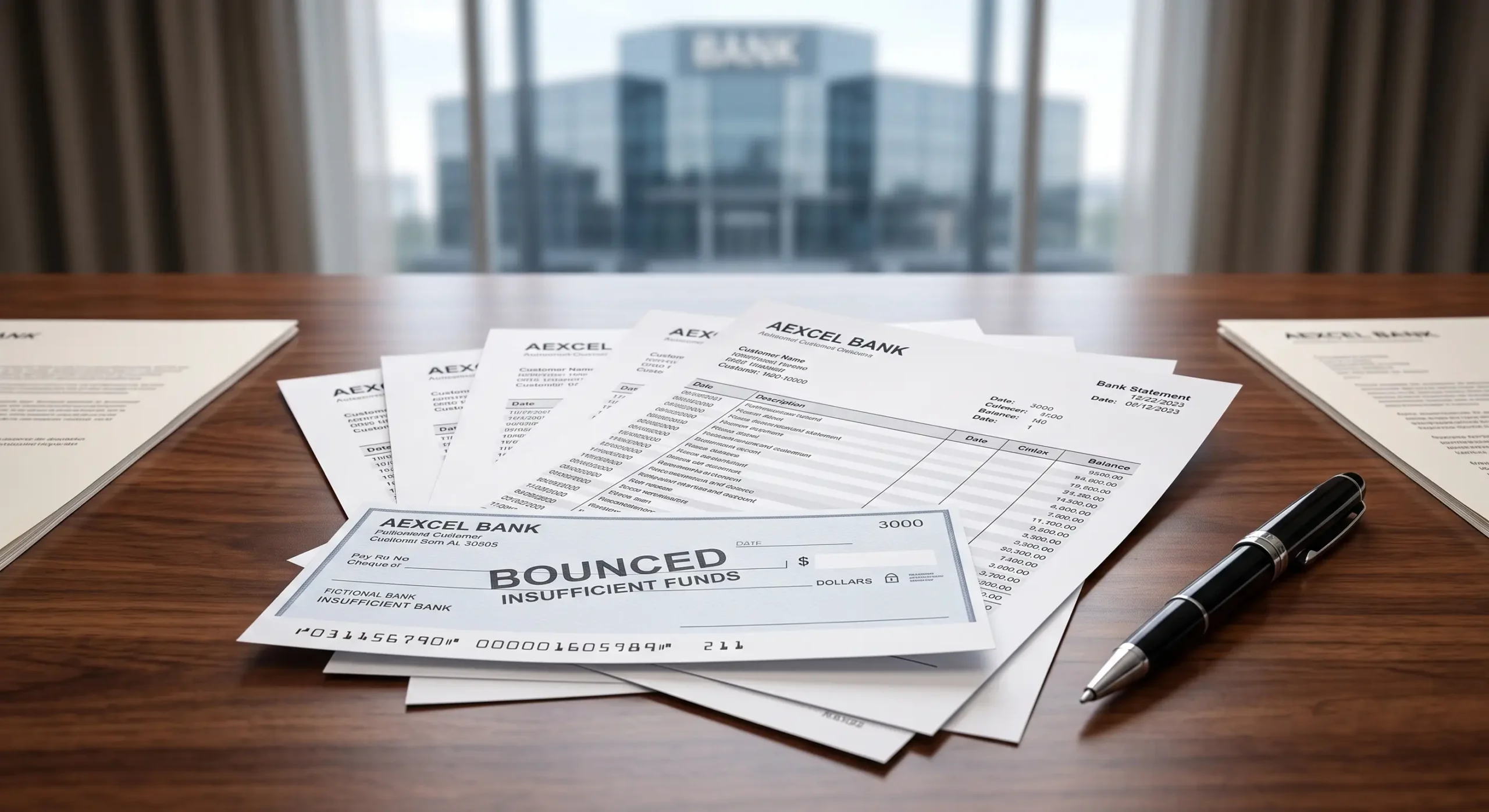
Assistance with bounced cheque cases, loan defaults, and bank guarantee disputes under UAE banking law.
Learn more
Representation in shareholder disputes, breach of contract claims, and partnership disagreements.
Learn more